Discover how mindful movement, refined awareness, and intelligent exploration can support greater ease, coordination, adaptability, and self-understanding. With more than 48 years of experience as a mind-body therapy practitioner and direct training under Dr. Moshe Feldenkrais, Bob Chapra brings depth, precision, and practical insight to the lifelong process of learning through movement.
The Feldenkrais Method is fundamentally an educational approach. Its purpose is not to impose a correct posture, prescribe a fixed exercise routine, or mechanically repair the body. Instead, as a holistic mind-body therapy, it helps people learn more about themselves through movement.
Dr. Moshe Feldenkrais recognized that human beings are not fixed systems. We are continually shaped by experience. The ways we stand, walk, breathe, reach, speak, perform, and respond to difficulty reflect patterns learned over time.
Some patterns serve us well. Others may become limiting through pain, injury, stress, habit, neurological change, or the demands of high-performance activity. Because these patterns are learned, they can also become available for further learning and adaptation.
This is the central principle of the Feldenkrais Method: when people learn to sense more clearly, they can discover more choices in how they move and act.
Movement is one of the most direct ways human beings learn. Long before children can explain balance or coordination, they learn through reaching, rolling, crawling, standing, falling, and trying again. The Feldenkrais Method returns attention to this natural process of discovery.
Learning through movement means using physical experience as a source of information. Instead of treating movement as something that must simply be performed correctly, Feldenkrais lessons invite the student to investigate how movement is organized.
A lesson might involve turning, rolling, bending, reaching, walking, or shifting weight. The movements may be small and gentle, but the learning process can be highly sophisticated.
Students are encouraged to notice:
These questions transform movement into an experiment. The student is not trying to imitate the teacher or achieve an externally defined shape. Instead, the student learns to observe, compare, and discover.
This is somatic learning: knowledge developed through direct sensory experience rather than intellectual information alone.
A person may understand that balance involves the feet, pelvis, spine, head, eyes, and environment. But sensing those relationships during movement creates a different kind of understanding—one that can influence action from within.
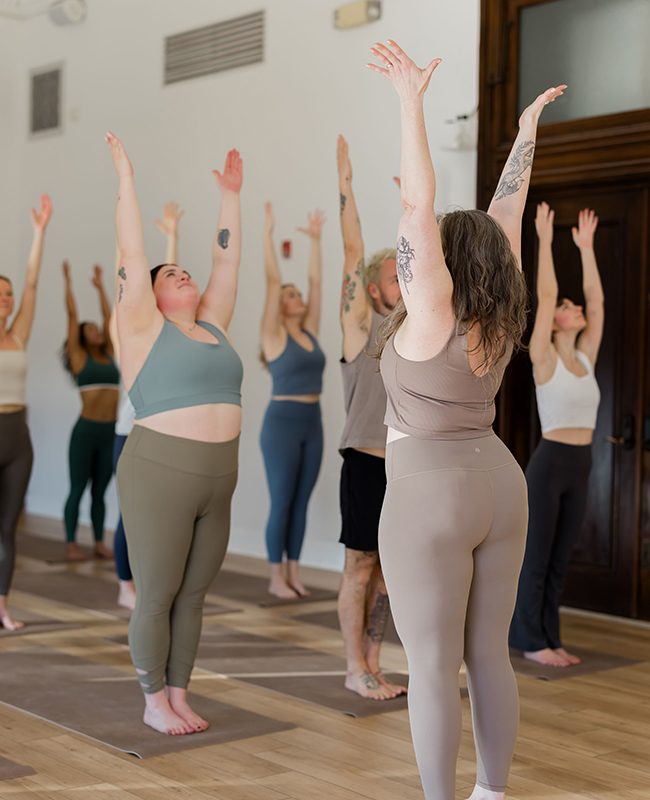
Many movement systems begin with an ideal model of how the body should function. The individual is then guided toward that model.
The Feldenkrais approach begins somewhere else: with the person’s existing experience.
Rather than asking, “What is the correct way to move?” it asks:
“What can this person learn about how they move, and what new possibilities might become available?”
This distinction matters. A correction imposed from outside may be temporarily adopted, but a movement possibility discovered through personal experience can become more meaningful and adaptable.
Feldenkrais therefore emphasizes curiosity over judgment, exploration over force, and awareness over performance.
The teacher provides guidance through verbal instruction, demonstration, or gentle hands-on exploration, but the student remains an active participant. The goal is not to make the student dependent on the teacher. It is to strengthen the individual’s ability to sense, interpret, adapt, and learn.
The nervous system continually receives sensory information, compares it with previous experience, and adjusts movement. This capacity for adaptation is commonly associated with neuroplasticity.
Learning is not limited to intellectual study. It also occurs through sensation, movement, attention, repetition, and experience within this mind-body therapy.
Feldenkrais lessons make these elements more conscious. By slowing movement and reducing unnecessary effort, students can notice distinctions that may be overlooked during habitual action.
A movement may feel different when it is performed:
These variations provide the nervous system with new information. The purpose is not to force a new pattern into place but to create conditions in which alternatives can be recognized.
This is why repetition in Feldenkrais is different from mechanical repetition. The student is not simply repeating the same action. They are comparing experiences and learning from differences.
Awareness is more than simply thinking about the body. It involves developing a clearer sense of what is happening while movement occurs.
A student may begin noticing differences between the two sides of the body, unnecessary muscular effort, changes in breathing, relationships between body parts, or how balance changes during transitions.
This increased awareness can also change the way people approach difficulty.
Instead of immediately thinking, “I cannot do this,” a student may begin asking:
These questions do not deny pain, limitation, or neurological difficulty. They make the experience available for careful investigation.
Awareness creates information, and information creates possibilities for learning.
One of the important benefits of Feldenkrais learning is the development of choice.
A person may discover that standing, walking, turning, reaching, speaking, or performing does not have to be organized in only one familiar way.
This can be particularly meaningful when movement has become restricted by pain, injury, stress, fear, or neurological change. The individual may begin to experience movement as less predetermined.
The goal is not to eliminate habits. Habits are essential to everyday functioning. The goal is to make them more flexible so that a person can choose an appropriate response to changing circumstances.
For a performer, choice may mean discovering different ways to prepare for a vocal phrase or gesture. For an older adult, it may mean finding several strategies for moving from sitting to standing. For someone living with persistent discomfort, it may mean exploring movement gradually rather than automatically avoiding it.
Learning expands the range of possible responses.
Feldenkrais lessons use repetition, but repetition is paired with attention and variation.
A movement may be explored several times while changing speed, direction, range, effort, or attention. Each variation gives the nervous system an opportunity to compare experiences.
The process may include:
Sensing — noticing what is happening.
Exploring — trying different possibilities.
Comparing — recognizing distinctions between options.
Repeating — becoming familiar with useful information.
Resting — allowing time for integration.
Integrating — noticing how learning influences ordinary movement.
Rest is particularly important. Pauses give students time to recognize differences without allowing effort to dominate perception.
Variation also allows the same action to be explored in different contexts. A movement might be investigated lying down, sitting, standing, walking, or through imagination.
The objective is not to complete an exercise perfectly. The value lies in the quality of the investigation.
Training often focuses on strength, endurance, flexibility, speed, or technical consistency. These are valuable qualities, but they are not identical to learning.
Learning involves discovering how an action is organized and recognizing new possibilities.
A small movement performed with clear awareness may provide more useful information than a large movement performed automatically. This makes Feldenkrais active rather than passive: the student is actively participating in understanding how they function.
Training and learning can complement each other. An athlete may train endurance while learning how to distribute effort efficiently. A musician may practice technical passages while exploring how breathing, balance, and attention influence performance. A person in rehabilitation may work on strength while developing greater awareness of how movement is initiated.
The Feldenkrais Method does not reject effort. It asks that effort be accompanied by awareness and adaptability.
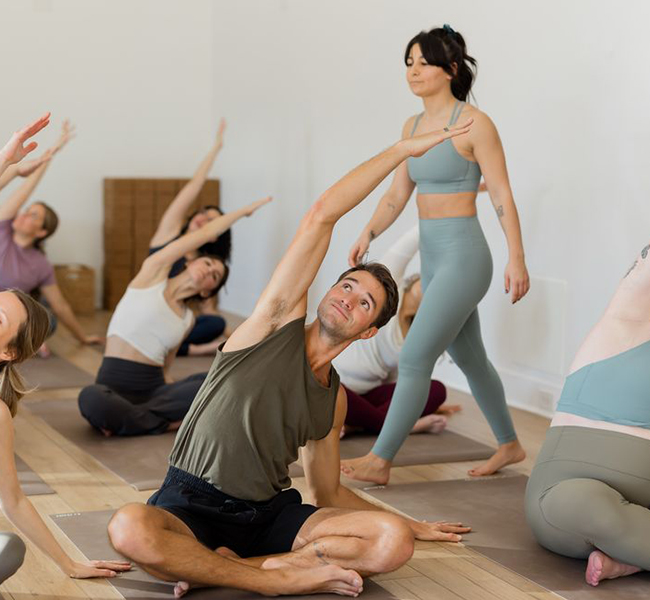
Ease does not mean weakness or the absence of effort. It refers to the possibility of accomplishing an action without unnecessary strain.
When people become more aware of excess effort, they may discover that movement can become more efficient. This may support:
For some people, ease may feel like comfort. For others, it may be clearer breathing, improved timing, more confidence with balance, or greater freedom during performance.
The experience is individual. The underlying principle remains consistent: learning can reduce unnecessary interference and support more organized action.

Persistent discomfort can influence movement far beyond the area where symptoms are experienced. People may develop guarding, bracing, avoidance, or compensatory habits.
A Feldenkrais lesson offers an opportunity to explore movement without demanding that a person push through discomfort. The student begins with what is available and investigates small, manageable variations.
For individuals experiencing chronic back pain, TMJ difficulties, thoracic outlet syndrome, stroke recovery challenges, balance difficulties, breathing problems, cerebral palsy, Parkinson’s disease, or other movement concerns, this educational approach may support greater awareness of how movement is organized.
It may help individuals explore:
Bob’s professional development and in-service teaching experience includes work with Thomas Jefferson University Hospital, Doylestown Hospital, Albert Einstein Medical Center, and Moss Rehab.
Feldenkrais is educational and movement-based, not a substitute for medical diagnosis or treatment. It does not promise to cure a medical condition, and individual experiences vary. Appropriate medical or rehabilitation care should be continued when needed.
Performing requires continuous coordination between movement, breathing, attention, timing, expression, and intention.
For actors, singers, and musicians, Feldenkrais can provide a practical laboratory for investigating how physical organization influences performance.
A performer may discover how unnecessary tension affects breathing, how balance influences vocal action, or how changing attention alters expression.
Bob taught in the Opera and Voice Department at the Curtis Institute of Music from 1994 to 2008 and presented eight times at the Voice Foundation’s Annual International Symposium.
He has also taught at universities, theaters, and international institutions and co-taught voice and movement workshops with voice coach Chuck Jones and actor Richard Fancy. Workshop participants have included actor Stanley Tucci and opera singer Juan Diego Flórez.
The goal is not to impose a universal performing style. It is to help performers understand their own organization and develop greater choice.
Singing involves the coordination of breathing, posture, vocal production, attention, and expression.
Feldenkrais exploration allows singers to investigate how the whole body participates in vocal action. A change in balance may influence breathing. A different relationship between the head and spine may change the experience of effort. A shift in attention may alter the way the singer experiences sound.
The purpose is not to prescribe a single “correct” vocal posture. It is to help the singer understand what supports their own performance.

Actors use movement as a language of communication. Feldenkrais can help them explore weight, rhythm, direction, timing, gesture, and physical intention.
Musicians, meanwhile, repeat highly specialized movements thousands of times. Somatic learning can help them investigate how the hands relate to the feet, pelvis, spine, breath, eyes, and surrounding environment.
This creates a broader understanding of performance: technique becomes connected to the whole person.
Bob Chapra has practiced since 1977 and trained directly under Dr. Moshe Feldenkrais in 1981, making him one of the early American practitioners personally trained by the founder of the Method.
He maintains one of the longest-running private Feldenkrais practices in Philadelphia and New York City. His experience spans individual work, performing arts, healthcare education, university teaching, professional development, and senior balance programs.
His approach is informed by decades of observing how people learn to move—not through a standardized formula, but through individual experience.
That perspective is especially valuable because meaningful learning cannot be forced. It requires appropriate challenge, clear attention, sufficient rest, and respect for the individual’s pace.
Feldenkrais learning is relevant not only to people experiencing movement difficulties but also to professionals and lifelong learners interested in human movement.
Physical therapists, occupational therapists, educators, performers, coaches, and movement practitioners can investigate principles of sensory learning, attention, coordination, and functional organization.
Bob’s teaching engagements have included Villanova University, SUNY Purchase, the Wilma Theater, the George Morrison Acting Studio, Sporthochschule Köln, the University of São Paulo, and the New York Open Center.
His experience across healthcare, education, performing arts, and community settings reflects the broad application of the Method.
Feldenkrais learning can occur through two primary formats: Functional Integration and Awareness Through Movement.
Functional Integration is an individualized lesson in which the practitioner uses gentle, noninvasive touch to communicate movement information. The student remains actively involved rather than being passively manipulated.
Awareness Through Movement consists of verbally guided movement explorations. Students may investigate sequences while lying, sitting, standing, or walking, with frequent opportunities to rest and compare sensations.
Both approaches share the same foundation: attention, exploration, variation, and learning.
Contact Bob Chapra in Philadelphia at 267-250-8674 or email feldybob@gmail.com to discuss individual sessions or group classes.
Balance is not simply a position. It is an ongoing neurological process involving sensory information from the eyes, inner ear, muscles, joints, skin, and environment.
Through gentle motor learning exercises, students can explore weight shifting, spatial orientation, transitions, walking, turning, and changes in direction.
Bob has also led a dedicated balance program for residents of Independence Place, bringing movement education into a senior-living environment.
Feldenkrais lessons can be adapted to individual needs and explored lying down, sitting, standing, or walking. The emphasis remains on attention, comfort, and discovery rather than competition.
For older adults, learning may support greater awareness during everyday activities such as getting out of a chair, turning, reaching, walking, or navigating changing environments.
The deeper benefit of Feldenkrais is not simply moving more easily. It is developing a more intelligent relationship with learning itself.
A person may begin to recognize how habits are formed, how attention changes experience, how small differences reveal new possibilities, and how movement can remain adaptable throughout life.
A change may begin with something very small: noticing that one shoulder rises before the other, discovering that breathing becomes easier when a movement is reduced, or realizing that a pause creates more choice than rushing forward.
These observations become information.
Information creates possibilities.
Possibilities create choice.
And choice is at the heart of learning.
The human body is not a fixed mechanism. It is a living, adaptive system capable of responding to experience. Learning through movement gives individuals an opportunity to engage that capacity with curiosity, precision, and respect.
Whether your goal is greater ease in everyday movement, improved body awareness, renewed confidence after a physical challenge, more refined performance, or deeper professional understanding, the process begins with attention.
👉 Disclaimer: The Feldenkrais Method is an educational, movement-based practice and is not a substitute for medical diagnosis, treatment, or professional healthcare. Individual experiences and outcomes vary. If you have a medical condition, injury, or new or worsening symptoms, consult an appropriate healthcare professional.
Explore a movement-based approach grounded in more than four decades of experience, direct Feldenkrais lineage, and respect for each person’s capacity to learn.
Contact Bob Chapra at 267-250-8674 or feldybob@gmail.com to discuss your goals and discover whether Feldenkrais learning is appropriate for you.