Change does not always begin with movement. Sometimes, it begins with noticing.
Body awareness training is not simply about noticing how the body feels. It is about developing a more precise relationship between sensation, movement, attention, and choice. Through the Feldenkrais Method®, Bob Chapra helps individuals explore how the nervous system organizes movement—and how greater awareness can support more efficient, comfortable, and adaptable ways of moving.
With more than 48 years of practice and direct training under Dr. Moshe Feldenkrais in 1981, Bob brings an unusually deep understanding of somatic learning to his work in Philadelphia and beyond. His approach is educational, gentle, and non-invasive, designed to help people discover possibilities rather than impose predetermined movement patterns.
Human movement is governed by an extraordinarily sophisticated system of sensory information, motor coordination, attention, memory, and adaptation. Yet much of everyday movement becomes automatic.
We stand, walk, breathe, speak, reach, sit, and turn without consciously analyzing how these actions are organized.
That efficiency is valuable—until a habitual pattern becomes restrictive.
Pain, injury, neurological change, stress, repetitive activity, or years of compensatory movement can alter how a person senses and organizes an action. The result may be unnecessary muscular effort, reduced mobility, diminished balance, or a feeling that movement has become unpredictable.
The Feldenkrais Method approaches this challenge through self-awareness through movement.
Rather than forcing the body into an ideal position, the practitioner creates conditions for learning. The individual observes differences, experiments with alternatives, and gradually develops a more refined internal map of movement.
Awareness becomes the mechanism through which choice expands.
Effective body awareness is more sophisticated than posture correction or simply “listening to your body.”
It involves distinguishing subtle differences in pressure, direction, effort, breathing, balance, timing, and muscular organization. These distinctions provide the nervous system with information it can use to regulate movement more effectively.
In Functional Integration® sessions, Bob may use gentle, precisely directed touch and movement to help a person perceive relationships that are difficult to recognize independently.
In Awareness Through Movement® lessons, verbal guidance invites participants to explore movements slowly and comfortably, often with variations that reveal how habitual patterns influence function.
These are not exercises designed to build strength through repetition alone. They are learning experiences.
The objective is not to make someone perform a movement correctly according to an external model. It is to help the individual recognize options.
That distinction is central to the Feldenkrais philosophy.
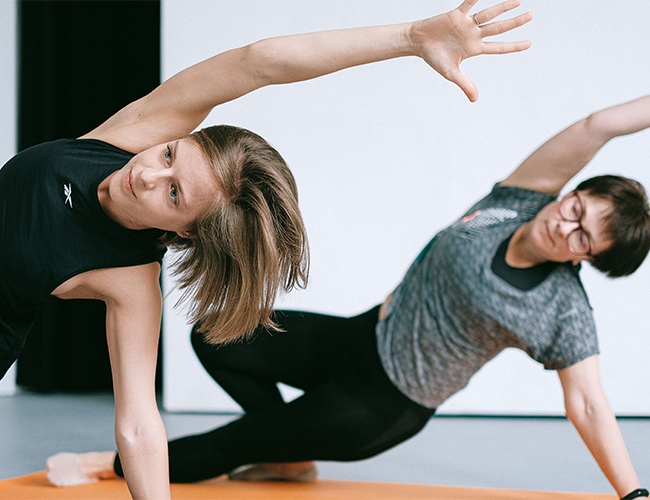
The Feldenkrais Method predates today’s widespread discussion of neuroplasticity, but its educational principles are closely aligned with several contemporary ideas about motor learning.
The nervous system changes through experience. Repetition matters, but repetition alone is not necessarily learning. The quality of attention, variation, sensory feedback, and the ability to discriminate between alternatives can influence how movement is learned.
A mindful movement practice therefore does not require intense concentration or physical exertion. It can involve small movements performed slowly enough that subtle distinctions become perceptible.
Variation is particularly important.
When a person explores several ways of performing an action, the nervous system receives a broader range of sensory and motor information. This can support adaptability rather than reinforce a single rigid strategy.
For individuals living with chronic pain or neurological challenges, this principle can be especially meaningful. Feldenkrais is not presented as a cure or replacement for medical care. Instead, it offers an educational framework that may complement appropriate medical, rehabilitation, or therapeutic support.

Pain can narrow movement into protection. Awareness can help reopen the field of choice.
People often seek movement-based support after conventional approaches have addressed the immediate physical problem but left them uncertain about how to move differently.
Bob has worked with individuals experiencing concerns including chronic back pain, TMJ-related difficulties, thoracic outlet syndrome, balance challenges, breathing problems, stroke recovery, cerebral palsy, Parkinson’s disease, and other somatic complaints.
Every person presents a different movement history.
There is therefore no universal Feldenkrais sequence designed to produce the same outcome for everyone.
Instead, Bob observes how the individual organizes movement and uses carefully chosen experiences to encourage greater awareness and adaptability.
A meaningful outcome may be as simple—and as significant—as discovering that an action can be performed with less effort.
That discovery can change how a person relates to movement.
For performers, awareness acts as an instrument of professional excellence.
Actors, singers, musicians, and voice professionals depend on nuanced coordination between breath, posture, movement, attention, and expression. Excess tension can interfere with efficiency and diminish expressive freedom.
Bob’s experience includes teaching in the Opera and Voice Department at the Curtis Institute of Music from 1994 to 2008, presenting at the Voice Foundation’s Annual International Symposium, and teaching at institutions and artistic organizations in the United States and internationally.
His workshops have included participants such as actor Stanley Tucci and opera singer Juan Diego Flórez, and he has collaborated with voice professionals and actors on the relationship between movement and expression.
For a performer, body awareness training is not separate from artistry. It can become part of the technical foundation through which movement, voice, presence, and attention are integrated.
Before changing a movement pattern, we must first become capable of perceiving it.
Modern neuroscience increasingly emphasizes the importance of sensory information in motor learning. The brain does not operate the body through isolated commands; movement emerges through continuous interaction between sensory input, prediction, feedback, attention, and environmental demands.
This is why sensory awareness exercises can be valuable within a movement-learning process.
A small change in the way a person rolls, turns, reaches, breathes, or distributes weight can reveal an unexpected relationship elsewhere in the body.
For example, someone experiencing persistent back discomfort may habitually stabilize through excessive muscular effort. Instead of simply strengthening the back, a Feldenkrais lesson may explore how the pelvis, ribs, spine, eyes, feet, and breathing participate in the movement as a whole.
The question becomes:
What information is the nervous system receiving, and what alternatives are available?
This systems-oriented perspective allows movement to be investigated rather than judged.
Bob’s work also extends into medical and rehabilitation education. He has provided professional development and in-service training at Thomas Jefferson University Hospital, Doylestown Hospital, Albert Einstein Medical Center, and Moss Rehab.
This experience reflects an important characteristic of the Feldenkrais Method: it can be explored by both individuals seeking personal change and professionals interested in understanding movement from a broader systems perspective.
Bob has also taught at Villanova University, SUNY Purchase, the Wilma Theater, the George Morrison Acting Studio, Sporthochschule Köln, the University of São Paulo, and the New York Open Center.
The common thread is learning.
Whether the learner is a patient, performer, clinician, student, or healthy adult, awareness provides a pathway toward greater participation in one’s own movement process.
Balance is not a single physical capacity. It is an ongoing conversation among the feet, eyes, vestibular system, joints, muscles, breathing, attention, and the environment.
As people age or adapt to neurological changes, this conversation may become less predictable. Fear of falling can then lead to guarded movement, reduced exploration, and further loss of confidence.
A Feldenkrais approach to balance emphasizes perception and adaptability rather than forcing stability. Gentle sensory awareness exercises may help an individual notice how weight shifts, how the head relates to the spine, and how the feet respond to changing support.
Bob’s experience includes leading a dedicated balance program for residents of Independence Place, a senior living community. This work reflects his belief that balance education should respect each person’s history, pace, and available range of movement.
For individuals recovering from stroke or living with Parkinson’s disease, cerebral palsy, or other neurological conditions, sessions are adapted to the person’s abilities and medical context. Feldenkrais does not replace neurological care or rehabilitation; it may provide an additional way to explore movement with greater attention and less unnecessary effort.
The value of a mindful movement practice is not limited to the session.
A person may begin to notice how they sit at a desk, carry a bag, climb stairs, turn toward a sound, or prepare to speak. These ordinary actions become opportunities to observe patterns before they become sources of strain.
This does not mean monitoring every movement or attempting to maintain perfect posture. Excessive self-correction can create another form of tension.
Instead, awareness invites curiosity.
Could the chair support more of your weight? Could your eyes participate in turning? Could your breathing remain available while you reach? Could you pause before repeating a familiar effort?
Such questions help transform movement from an automatic demand into an ongoing learning process.
Nearly five decades of practice reveal a consistent truth: deeper awareness can create new possibilities for movement.
Bob Chapra began practicing in 1977 and trained directly with Dr. Moshe Feldenkrais in 1981. He also worked closely with Carola H. Speads, a senior assistant to Elsa Gindler.
That history gives his practice a distinctive depth: decades of direct experience with the principles, language, and experiential nature of the Feldenkrais Method.
Today, Bob maintains one of Philadelphia’s longest-running private Feldenkrais practices, bringing nearly five decades of observation, teaching, and movement research into individualized work.
His philosophy remains grounded in a simple but profound proposition:
The capacity to move differently begins with the capacity to perceive differently.
Transformation is rarely identical from one person to another. Awareness makes the process personal.
The effects of awareness are individual and cannot be guaranteed. Some people report greater ease in the back, improved spatial orientation, more comfortable breathing, or a clearer sense of how they organize movement.
One client, Julie H. Linden, PhD, described how the Feldenkrais technique, as practiced by Bob, helped heal her herniated disc and restore ease of movement with no residual pain. Her experience is personal, not a promise of a particular result, but it illustrates the kind of meaningful change that can emerge when movement is approached as a learning process.
Other clients have described Bob’s work in equally direct terms. Karen Lautzenheiser said, “Putting myself in Bob’s hands is one of the best things I have done.” Voice coach Clyde M. Vinson observed, “Working with Bob Chapra is one of the best things a body can do.”
These reflections point toward a central quality of the practice: the individual remains an active participant in the process.
You do not have to force change to begin changing your relationship with movement.
You can begin by noticing.
How much effort do you use to stand? What happens to your breathing when you turn? Can you feel differences between one side and the other? What changes when a familiar movement becomes slower, smaller, or easier?
These questions are the beginning of exploration.
If you are living with persistent movement difficulties, recovering from a neurological challenge, seeking greater physical ease, or looking for greater precision as a performer, Bob Chapra offers a deeply experienced, individualized approach to somatic learning.
Your next movement possibility may already be there—waiting to be perceived.
Explore what greater awareness may make possible.