
Functional Integration

Functional Integration: An Intelligent Approach to Movement, Awareness, and Human Performance
Functional Integration is the individualized, hands-on dimension of the Feldenkrais Method®—a sophisticated movement-learning process designed to help you explore how you organize movement, attention, balance, and effort. For people living with persistent discomfort, neurological challenges, movement limitations, or the demands of high-level performance, Functional Integration offers a quiet alternative to approaches that focus primarily on symptoms.
For more than nearly a half century of experience, Bob Chapra has explored the relationship between awareness and movement. He began practicing in 1977 and trained directly under Dr. Moshe Feldenkrais, the founder of the method, in 1981. Today, his Center City Philadelphia practice reflects decades of observation, teaching, clinical collaboration, and direct experience with performers, rehabilitation professionals, and individuals seeking greater ease in everyday life.
When movement becomes more perceptible, new possibilities for movement can emerge.
- Book Consultation
Begin Your Feldenkrais Journey
- Individual Feldenkrais Sessions
- Awareness Through Movement Classes
- Questions & General Information
What Is Functional Integration Feldenkrais?
Functional Integration Feldenkrais is a personalized lesson conducted one-on-one. Rather than prescribing a standardized sequence of exercises, the practitioner uses gentle touch and carefully guided movement to help the student sense relationships within the body that may otherwise remain outside conscious awareness.
The emphasis is not on forcing a joint farther, strengthening a particular muscle, or correcting the body according to an external ideal. Instead, the process investigates how movement is organized.
A hands-on Feldenkrais session may explore the relationship between the head and pelvis, the organization of the spine, breathing, weight distribution, balance, or the coordination of the limbs. The practitioner adapts the lesson to the individual, creating conditions in which the nervous system can notice distinctions and experiment with alternatives.
This is where Feldenkrais differs fundamentally from an exercise-based model. The central resource is learning through awareness.
From Neuroplasticity to Practical Movement Learning
The Science Behind the Method
The Feldenkrais Method sits at the intersection of somatic education, motor learning, sensory awareness, and nervous-system adaptability. Modern neuroscience has established that the brain and nervous system remain capable of adapting through experience. Movement, therefore, is not simply a mechanical action produced by muscles and joints; it is an ongoing process shaped by sensory information, attention, repetition, context, and perception.
Functional Integration applies this learning-oriented perspective through gentle, individualized movement exploration. Rather than attempting to force a predetermined correction, the practitioner introduces small variations in movement, changes direction or timing, and brings attention to sensations that may ordinarily remain outside conscious awareness. The student is given an opportunity to notice, compare, and learn.
Small distinctions can become meaningful.
A person may discover that turning the head does not require unnecessary effort in the shoulders. Someone experiencing balance difficulties may begin to recognize how weight shifts through the feet and how the rest of the body participates in maintaining stability. A performer may become more aware of the relationship between breathing, posture, movement, and vocal expression. Someone exploring persistent back discomfort may notice habitual bracing and begin to distinguish it from movement that feels more organized and adaptable.
This process engages several dimensions of movement learning at once: awareness creates a clearer sensory map; movement provides opportunities for variation; repetition allows new possibilities to become familiar; and self-discovery places the learner at the center of the process. Over time, this may support greater movement efficiency, coordination, and ease—not because the body has been mechanically corrected, but because the person has developed more options for organizing action.
The concept of neuroplasticity is relevant here, but it should be understood carefully. Feldenkrais work does not claim to produce a predetermined neurological change or cure a medical condition. Instead, it creates an environment in which the nervous system can encounter new sensory and movement information and respond through learning.
That is what makes the method both subtle and practical. The work begins with the body, but it does not treat the body as an isolated mechanical structure. Breathing, balance, attention, perception, emotion, posture, and movement are experienced as interconnected aspects of a whole person.
Its intelligence lies precisely in its refusal to overwhelm the system. By reducing unnecessary effort and increasing the quality of attention, Functional Integration gives the individual space to recognize possibilities that may already exist within their own movement repertoire—and to learn from them.
What Functional Integration Offers
A Functional Integration lesson can be remarkably subtle. The objective is not to overwhelm the body with intensity but to create enough sensory information for the student to recognize distinctions.
Greater Body Awareness
Many movement habits operate automatically. Functional Integration can make aspects of these patterns more perceptible, allowing individuals to recognize where they habitually exert effort, restrict movement, or organize themselves around discomfort.
More Efficient Movement
Efficiency does not mean moving faster or doing more. It means potentially accomplishing an action with less unnecessary effort and greater adaptability.
A Deeper Learning Process
Rather than receiving instructions to “fix” posture or movement, the student participates in an investigation. This can create a more durable understanding because the individual discovers relationships firsthand.
Gentle, Non-Invasive Exploration
The method uses comfortable, exploratory movement and gentle touch. There is no emphasis on forceful manipulation or pushing through pain.
Stress Reduction Through Awareness
Slower movement and sustained attention may create opportunities to reduce habitual physical effort and become more aware of breathing and bodily organization. This can contribute to a greater sense of ease, although individual experiences vary.
An Individualized Framework
Every lesson can be adapted to the student’s current abilities, interests, history, and goals. The approach is therefore particularly valuable when a person’s movement needs are complex or highly specific.
Ready to explore how movement learning can help you?
Feldenkrais for Back Pain: Exploring the Organization Behind Movement
Persistent back discomfort can become intertwined with protective habits: muscular tension, restricted movement, altered breathing, or avoidance of particular positions. Feldenkrais for Back Pain does not attempt to diagnose or medically treat the underlying cause. Instead, it offers an educational way to investigate how you move and how habitual patterns may influence your experience.
Through gentle, individualized exploration, a student may become more aware of how the pelvis, spine, ribs, head, and limbs participate in everyday actions.
Bob’s work has included individuals seeking greater ease after significant movement challenges. Julie H. Linden, PhD, has described how working with Bob helped her recover ease following a herniated disc, with no residual pain.
Such experiences are individual rather than guarantees of outcome. Feldenkrais is a movement-education method, not a substitute for medical diagnosis or treatment.

TMJ Pain Relief Through Awareness and Movement
The jaw rarely functions in isolation. Its movement is coordinated with the head, neck, breathing, tongue, eyes, and broader organization of the body.
For individuals exploring TMJ pain relief, a Feldenkrais lesson may investigate these relationships without aggressively manipulating the jaw. Attention can be directed toward how the head rests, how the mouth opens, how the tongue moves, or how unnecessary effort appears elsewhere in the body.
The intention is to expand awareness and movement options—not to force a correction.
This distinction is important. Feldenkrais work can complement appropriate medical or dental care, but persistent jaw pain should be evaluated by a qualified healthcare professional when indicated.
One-on-One Feldenkrais: Precision Without Force
A one-on-one Feldenkrais lesson is inherently individualized.
There is no requirement to perform perfectly. There is no predetermined movement range that every student must achieve. Instead, the practitioner observes and responds to the person’s current organization.
This makes Functional Integration particularly relevant to people whose needs do not fit neatly into a standardized program, including individuals with neurological conditions, performers with highly specialized movement demands, older adults exploring balance, and people who simply want a more refined relationship with their bodies.
The practice is gentle and non-invasive. Movements are generally small, comfortable, and exploratory, allowing attention to remain available rather than dominated by effort.
Feldenkrais Physical Therapy? Understanding the Difference
Feldenkrais and physical therapy can sometimes appear similar because both may involve movement, function, and rehabilitation settings. But, they are not the same discipline.
Feldenkrais physical therapy is therefore not technically a single modality. Feldenkrais is an educational movement method; physical therapy is a healthcare profession with its own diagnostic, therapeutic, and rehabilitative scope.
A physical therapist may prescribe exercises or therapeutic interventions to address a diagnosed condition. A Feldenkrais practitioner facilitates learning through sensory awareness and movement exploration.
Depending on an individual’s circumstances, these approaches may be complementary. Bob’s professional development experience includes training and in-service work with organizations such as Thomas Jefferson University Hospital, Doylestown Hospital, Albert Einstein Medical Center, and Moss Rehab.
Who This Work Is For
Functional Integration is not limited to one demographic or one type of movement concern.\
People Exploring Chronic Pain or Neurological Challenges
Bob has worked with individuals dealing with concerns including back pain, TMJ, thoracic outlet syndrome, balance difficulties, breathing problems, stroke recovery, cerebral palsy, and Parkinson’s disease.
For these individuals, the focus is on movement awareness and learning rather than presenting Feldenkrais as a medical cure.
Performing Artists and Musicians
For performers (Actors, singers, opera professionals, and voice specialists), movement is not merely functional—it is expressive. They depend upon exceptionally refined relationships between movement, breathing, balance, and expression
Bob’s teaching history includes the Curtis Institute of Music’s Opera and Voice Department, where he taught from 1994 to 2008, as well as presentations at the Voice Foundation’s Annual International Symposium. He has also taught at universities, theaters, and international institutions and co-taught voice and movement workshops with experienced performers and voice professionals.
Performers often operate at the intersection of precision and spontaneity. Excess effort can interfere with responsiveness; excessive control can restrict expression.
Functional Integration can provide a laboratory for investigating these relationships.
The same principles can benefit professionals outside the performing arts. Anyone whose work depends on concentration, posture, communication, or sustained physical presence can benefit from learning to recognize unnecessary effort and discover more efficient options.

Medical and Rehabilitation Professionals
Professionals interested in somatic education can encounter Feldenkrais as a complementary perspective on movement, perception, and learning.
Bob’s institutional teaching experience provides a bridge between movement education and rehabilitation environments.
Students and Lifelong Learners
Some people arrive without a specific physical complaint. They simply want to understand themselves better—to improve awareness, coordination, posture, movement efficiency, or physical confidence.
Older Adults Seeking Greater Balance Awareness
Balance depends on more than muscular strength. It involves sensory information, orientation, attention, and the ability to respond to changing conditions.
Bob has also led a dedicated balance program for residents of Independence Place, providing a real-world example of how movement awareness can be explored within an older-adult community.
Three Dimensions of Bob Chapra's Practice
Functional Integration is part of a broader Feldenkrais practice that includes:
Functional Integration®
Individualized, hands-on lessons designed around the student’s particular needs, interests, and movement questions.
Awareness Through Movement®
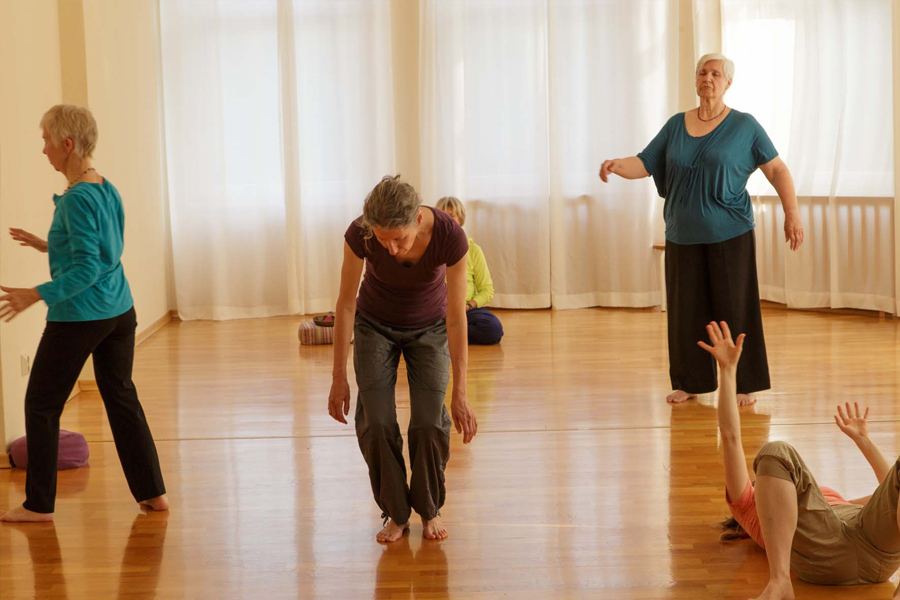
Guided group lessons using verbal instruction rather than hands-on contact. Students explore movement at their own pace while developing greater sensory awareness.
Feldenkrais Classes
Classes provide an accessible environment for exploring the principles of the method collectively, making movement learning a continuing practice rather than a one-time experience.
Across all three formats, the underlying themes remain consistent: awareness, movement, learning, neuroplasticity, efficiency, self-discovery, and whole-person integration.
A Practice Built on Experience and Direct Lineage
Bob Chapra brings an unusually deep historical connection to the Feldenkrais Method. After beginning his practice in 1977, he trained directly with Moshe Feldenkrais in 1981 and has maintained one of the longest-running continuous private Feldenkrais practices in Philadelphia. He also worked closely with Carola H. Speads, a senior assistant to Elsa Gindler, who selected him to help promote her work.
His work has extended across private practice, performing arts, universities, hospitals, rehabilitation settings, and senior communities—including a dedicated balance program for residents of Independence Place.
That breadth matters because movement is not an isolated physical problem. It is part of a larger human system involving perception, attention, emotion, environment, habit, and learning.

Disclaimer
The Feldenkrais Method is a form of movement education and somatic learning. It is not a medical treatment, physical therapy, psychological therapy, or substitute for diagnosis and care from a licensed healthcare professional.
Individual experiences vary, and no specific outcome can be guaranteed. People with acute pain, serious medical conditions, recent injuries, or neurological symptoms should consult an appropriate healthcare professional regarding their care.
Functional Integration may be used as a complementary educational approach when appropriate.
Begin With Curiosity, Not Force
The most important question in movement education is not always, “How can I make my body do more?”
Sometimes it is:
“What could I notice that I have never noticed before?”
Functional Integration provides a structured environment for asking that question.
Whether you are exploring chronic back discomfort, TMJ-related concerns, balance, neurological movement challenges, performance demands, or simply a desire for greater bodily awareness, Bob Chapra offers an experienced, individualized approach grounded in decades of Feldenkrais practice.
If you are curious about whether Functional Integration is appropriate for your goals, contact Bob Chapra to discuss your needs and explore a one-on-one Feldenkrais session.
Bob Chapra
267-250-8674
feldybob@gmail.com
Center City Philadelphia
When you learn to notice movement differently, you may discover that your body has more possibilities than you imagined.